Knowledge Centre
Crack Reduction Membrane for Resin Bound Surfacing
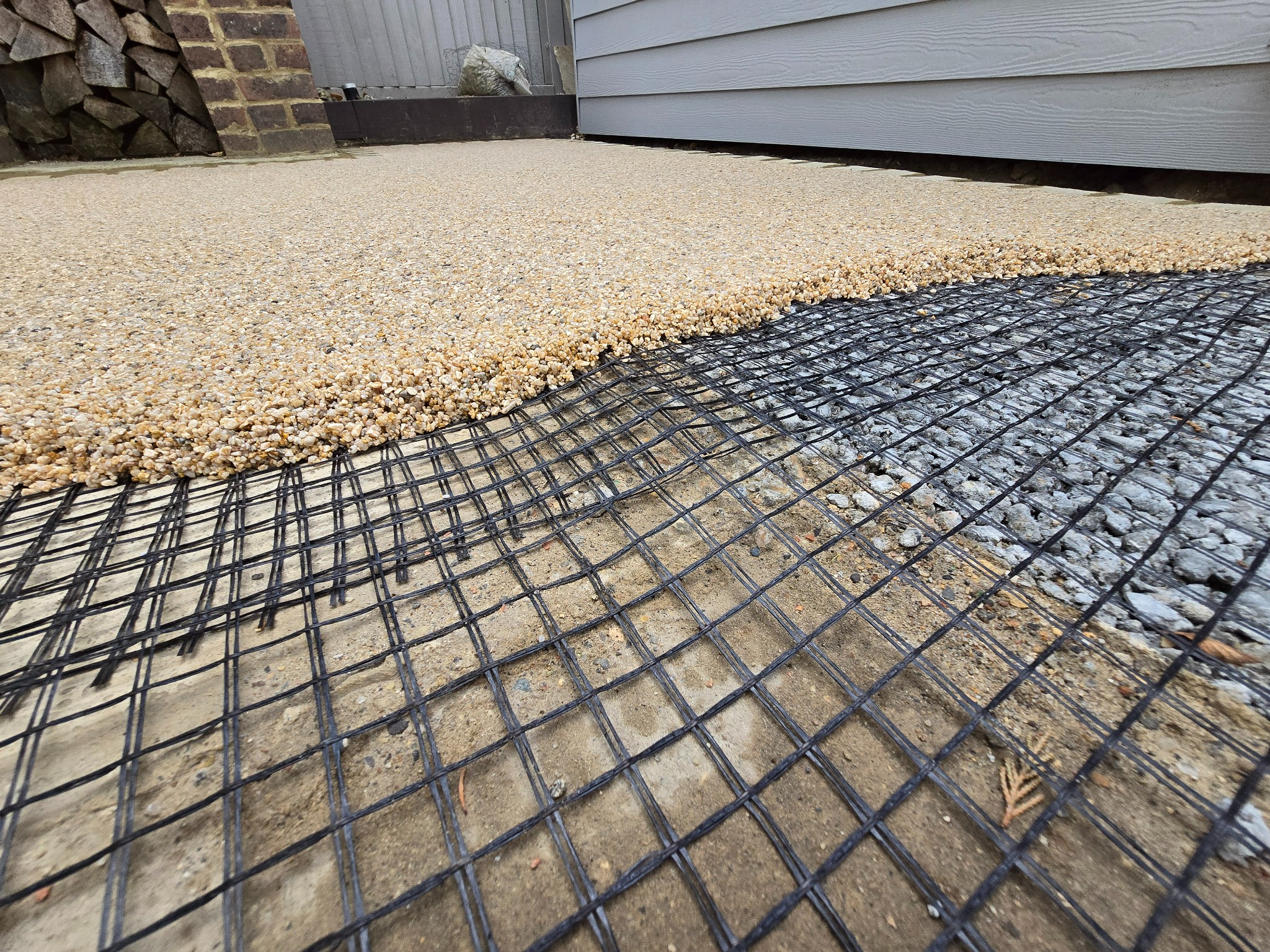
A crack reduction membrane is a reinforcement mesh that helps reduce the risk of cracks in a concrete or tarmac base showing through a new resin bound surface. The use of mesh in resin bound driveways is relatively recent. Civil engineers have used related geogrid technology for decades, and the growth of resin bound stone has brought different grades into use for driveways, paths and commercial paving.
From civil engineering to resin bound driveways
Tensar dates the original polymer geogrid patent to 1978. Civil engineers have since used geogrids in road foundations, temporary working platforms, railway trackbeds and reinforced soil structures. In a granular sub-base, correctly sized stone locks into the grid openings. The grid restrains sideways movement of the aggregate, helping the compacted layer resist deformation.
The function depends on where the reinforcement sits. A stiff ground grid helps stabilise compacted fill. A flexible paving interlayer helps manage stresses in an overlay. Tensar, for example, offers glass-filament asphalt interlayers designed to reduce the risk of cracks in an existing bound layer working their way up through new asphalt. Read Tensar’s guide to geogrids and its asphalt paving grid technical note for the civil engineering background.
How reinforcement mesh helps reduce reflective cracking
If you lay resin bound stone over sound concrete or tarmac, movement at an existing crack or a change in the base can show through as a reflective crack. A suitable mesh adds tensile reinforcement and helps spread stress across a wider area. Typical locations include repaired hairline cracks, corners, around utility covers and where two sound substrates meet. On larger jobs, the specification may call for reinforcement across the whole surface.
Start by checking the condition and evenness of the base. Repair unstable areas, investigate recurring movement and carry active movement joints through the finished surface as specified. Check that the mesh can lie flat and that the resin bound mix can work through the openings and fully surround it. A thick mesh on an uneven base or beneath a shallow finish can leave voids. See our guide to crack reduction membranes under resin bound surfacing.
Choosing a mesh grade for resin, concrete, tarmac or soil
Our more flexible mesh grades are easier to handle and detail around edges and covers than a rigid ground grid. Different mesh thicknesses are available with different tensile strengths and intended applications. A low-profile grade can suit a thinner resin bound build-up where there is enough depth to embed it. For a deeper build-up or more demanding loading, choose a grade using its declared tensile performance, stiffness and opening size alongside the surface depth, aggregate size and expected traffic.
Suitable grades of our mesh can also be specified in the granular foundation beneath concrete or tarmac, or beneath compacted aggregate to stabilise weak soil. Where the design calls for reinforcement within structural concrete or directly between asphalt layers, use a grade specifically approved for that application and follow the pavement specification. The mesh, fill and placement all need to suit the job.
By the square metre or in full rolls
Advanced Resin Supplies offers reinforcement mesh by the square metre for repairs and small projects, and 2 m × 100 m rolls for larger areas. For larger quantities, we can also supply 4 m-wide rolls by arrangement. These are very heavy, so confirm the roll weight and arrange suitable unloading equipment before delivery.
Contact Advanced Resin Supplies with your base type, intended surface depth, area and expected traffic. We can help you choose a grade and roll size for the job.


