
Knowledge Centre
Can You Lay Resin Bound Surfacing Onto an Existing Base?
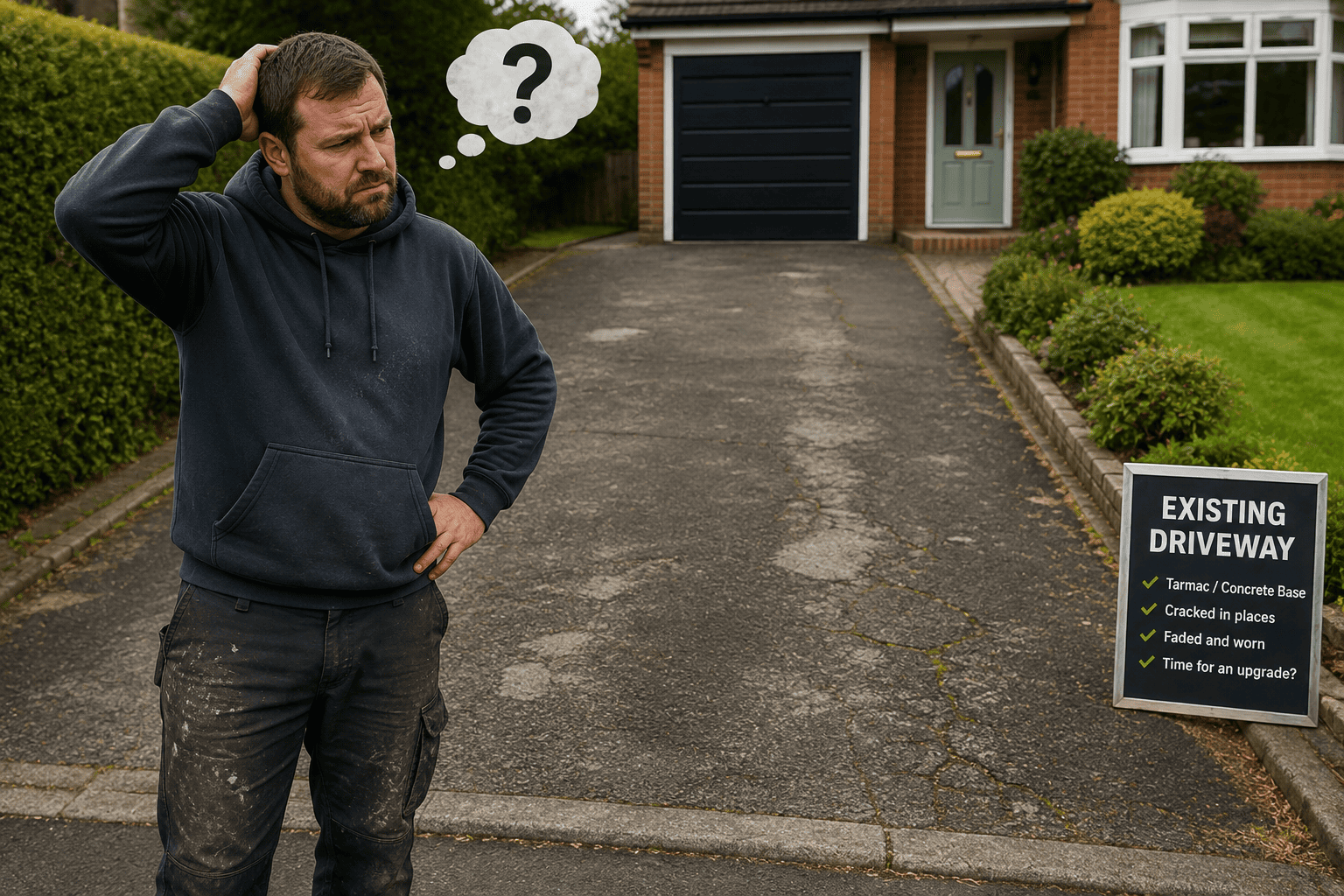
The short answer is yes—provided the existing base is structurally sound and suitable for the intended use.
In fact, many resin bound driveways, patios and pathways are installed as overlays onto existing concrete or asphalt, saving both time and money by avoiding the need for a complete reconstruction.
However, the condition of the existing base is crucial. A resin bound surface is only as strong as the foundation beneath it, so careful assessment and preparation are essential before installation begins.
Which Existing Bases Are Suitable?
Resin bound surfacing can often be installed over:
- Existing concrete
- Existing asphalt (tarmac)
- Permeable asphalt
- Permeable concrete
- Existing resin bound surfaces (following inspection)
- Other stable, well-constructed hard surfaces in suitable condition
The existing base should be:
- Structurally sound
- Stable with no movement
- Properly drained
- Free from contamination
- Free from loose or damaged areas
If the base is failing, cracked extensively or moving under load, simply covering it with resin bound surfacing is unlikely to solve the problem.
Check the Existing Surface Carefully
Before deciding to overlay an existing base, inspect it for:
- Structural cracks
- Loose or rocking slabs
- Oil contamination
- Frost damage
- Soft spots
- Standing water
- Poor drainage
- Significant settlement
Minor defects can often be repaired before installation, but serious structural issues should be addressed first.
Why We Recommend a Crack Reduction Membrane
Even when an existing base appears to be in excellent condition, we generally recommend installing a crack reduction membrane, particularly over concrete and older asphalt surfaces.
Concrete and asphalt naturally expand and contract with changes in temperature. Over time, this movement can cause existing cracks to transfer through the new resin bound surface, a process known as reflective cracking.
A crack reduction membrane provides additional tensile reinforcement beneath the resin bound system, helping to absorb movement within the substrate and significantly reducing the likelihood of cracks appearing in the finished surface.
The membrane is particularly beneficial for:
- Concrete driveways
- Asphalt overlays
- Repaired surfaces
- Utility trenches
- Around manholes
- Areas where different substrates meet
- Internal and external corners
For many projects, it’s a relatively small investment that can greatly improve the long-term performance of the installation.
Priming Concrete Surfaces
Concrete is naturally porous and can absorb resin if left untreated.
Highly absorbent concrete may draw resin away from the decorative aggregates during installation, potentially affecting bond strength, consistency and the overall finish.
For this reason, we recommend applying a suitable polyurethane primer or sealer before installing the resin bound surface.
Priming offers several advantages:
- Reduces resin absorption into the concrete
- Improves adhesion between the base and the resin bound system
- Helps achieve more consistent curing
- Minimises the risk of dry patches
- Can reduce overall resin consumption on highly porous substrates
The correct primer should always be compatible with the resin system being used.
What About Existing Asphalt?
Existing asphalt (tarmac) is often an excellent base for resin bound surfacing, provided it remains structurally sound.
It offers several advantages:
- Good flexibility
- Excellent load-bearing capacity
- Reduced risk of reflective cracking compared with concrete
- Faster installation compared with complete reconstruction
Older asphalt should still be inspected for loose areas, cracking or contamination before overlaying.
When Should the Existing Base Be Replaced?
Overlaying is not always the best solution.
Complete reconstruction may be necessary if the existing base shows signs of:
- Significant movement
- Major settlement
- Extensive cracking
- Poor drainage
- Weak construction
- Inadequate thickness for the intended traffic
Installing resin bound surfacing over a failing base will not correct underlying structural problems and may lead to premature failure.
The Importance of Proper Preparation
Successful resin bound installations depend on thorough preparation.
Before laying resin bound surfacing, the existing base should be:
- Cleaned thoroughly
- Dry
- Repaired where necessary
- Primed if required
- Reinforced with a crack reduction membrane where appropriate
Taking the time to prepare the substrate correctly is one of the most effective ways to maximise the lifespan of the finished surface.
Expert Advice from Advanced Resin Supplies
At Advanced Resin Supplies, we’ve installed resin bound surfacing for many years before becoming suppliers. Our experience has shown that successful overlays begin with a thorough assessment of the existing base.
We can advise on:
- Whether your existing base is suitable
- Primers and sealers
- Crack reduction membranes
- Base preparation
- Material quantities
- Installation techniques
- Products best suited to your project
Whether you’re renovating an existing driveway or planning a new commercial installation, our technical team can help you select the right system to achieve a strong, durable and professional finish.
Thinking About Overlaying an Existing Driveway?
If you’re unsure whether your existing concrete or asphalt surface is suitable for resin bound surfacing, contact the team at Advanced Resin Supplies. We’ll help you assess your base, recommend the appropriate preparation methods and ensure you have the right products for a long-lasting installation.


