Knowledge Centre
What Is the Best Power Trowel for Resin Bound Surfacing?
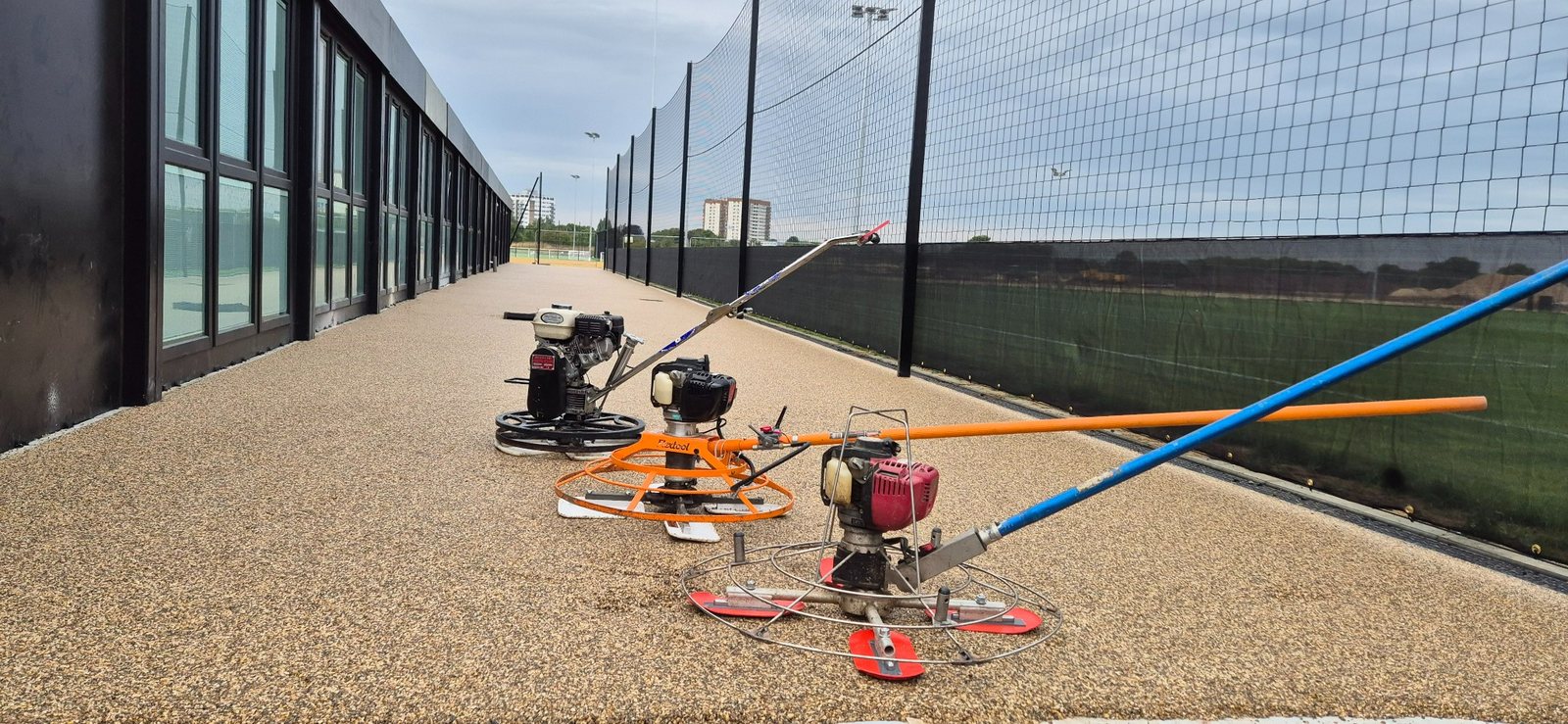
The best power trowel for resin bound stone is the one that gives you an even, compacted finish without dragging the mix or leaving blade marks. That can change from one job to the next. The shape of the stone, the viscosity of the binder and the layout of the site all affect how the machine behaves.
Start with the stone shape and resin viscosity
Rounded particles generally move past one another more readily. More angular stone tends to interlock and can take more work to settle evenly. The grading matters too. Blends with different proportions of fine and coarse stone can respond differently under the same set of blades.
Viscosity is how readily the binder flows. A thicker binder can make the mix feel harder to move, while a more fluid mix may shift under a blade that puts too much pressure on one spot. Temperature and the time since mixing also change how the material feels. Compare setups on a small test panel using the actual blend, binder and specified laying depth, at a similar point in the mix’s working time.
Try a blade change first
The blades control how the machine’s weight is spread across the surface. At the same machine weight, a broader contact area generally spreads the load. A smaller contact area concentrates it. Blade shape and pitch also affect how much of each blade is actually touching the mix. Use blades approved for the machine and check the finish after each adjustment.
Look for an even texture, consistent compaction and a clean transition between passes. If the blades pull stones, leave ridges or push material ahead of them, change one variable at a time so you can see what made the difference.
When machine size or weight makes the difference
On a narrow path, beside walls or around awkward edges, a compact head is easier to manoeuvre. A wider machine covers more ground per pass on an open driveway or commercial area. Keep a hand trowel available for the places the machine can’t reach, including tight corners and around drains.
A light machine can be easier to guide on a mix that moves readily. If a stiffer blend still needs more compaction with suitable blades fitted, a heavier resin bound machine or a model with manufacturer-approved weights may give you better control over the finish. Compare the weight and the blade contact area together, because both affect how the machine loads the surface.
Compare power trowels in hands-on training
At Advanced Resin Supplies, we offer practical training covering the most common types of resin bound finishing machines on the market. We explain how blade shape, machine size and weight change the finish and give you the chance to test available setups side by side. Tell us which stone and binder you normally use and the sort of jobs you take on. We’ll confirm which machines you can try.
Ask us about power trowel training and testing. You can also take a look at The Wand lightweight power trowel in our shop.


