

Knowledge Centre
Why the Mixer and the Mixer Operator Are Critical to a Successful Resin Bound Installation
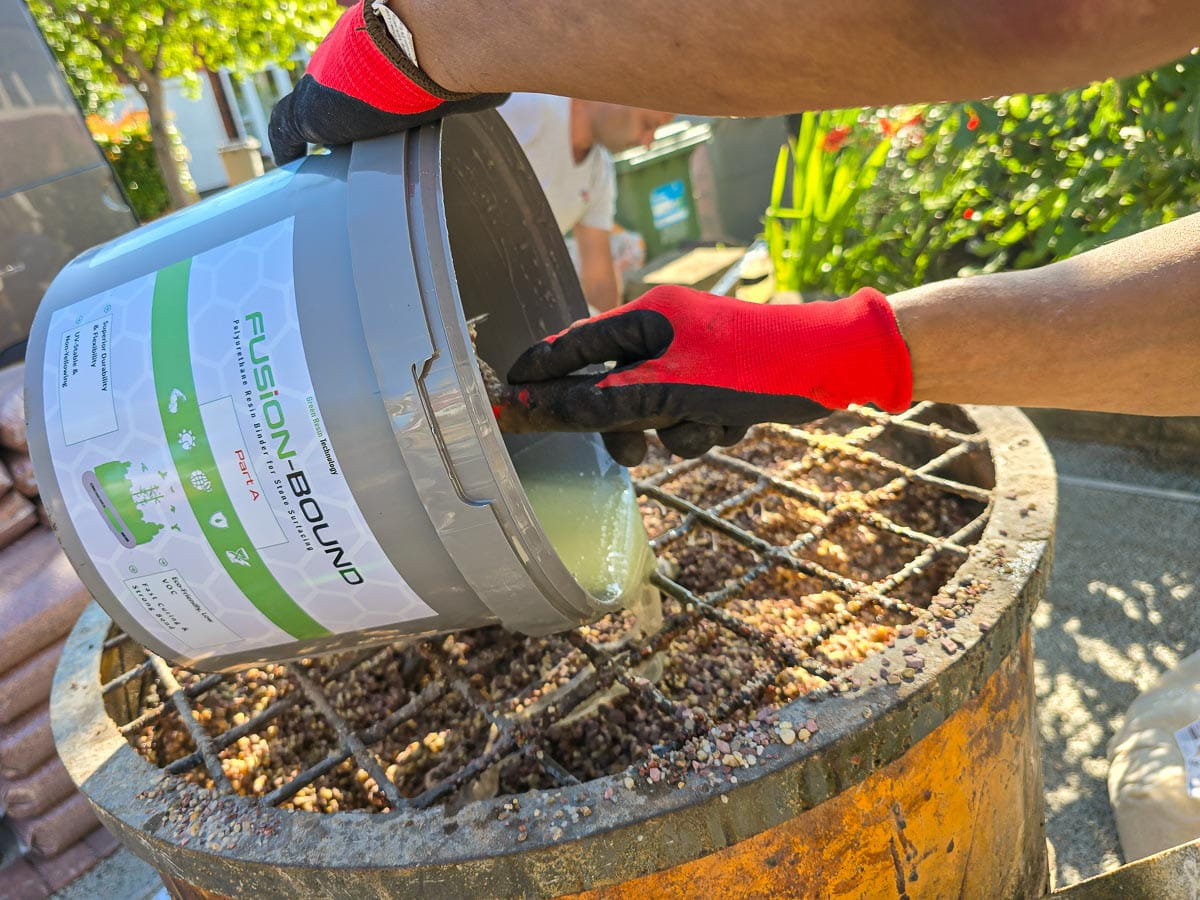
When people think about installing a resin bound driveway, they often focus on the decorative stone, the resin or the final trowelled finish. While all of these are important, one stage has a greater influence on the strength and long-term performance of the surface than almost any other—the mixing process.
Even the highest quality resin and aggregates cannot compensate for poor mixing. A correctly mixed batch produces a strong, durable and consistent surface, while a poorly mixed batch can result in weak areas, inconsistent curing and premature failure.
Mixing Is Where the Chemical Reaction Begins
A resin bound system relies on a two-part polyurethane resin, consisting of:
- Part A – Polyol
- Part B – Isocyanate
These two components must be mixed thoroughly before they are added to the decorative aggregates.
This isn’t simply blending two liquids together—it is the start of a chemical reaction. If Parts A and B are not mixed completely, some areas of the batch may contain too much of one component and not enough of the other.
This can lead to:
- Soft or sticky patches
- Reduced bond strength
- Poor curing
- Inconsistent colour
- Premature surface failure
A few extra seconds spent mixing the resin correctly can make the difference between a surface that lasts for years and one that develops problems shortly after installation.
Keep Water Away from the Resin
Polyurethane resin is highly sensitive to moisture.
Water entering the resin during mixing can interfere with the chemical reaction and may cause:
- Foaming
- Whitening or clouding
- Reduced strength
- Poor adhesion to the aggregates
For this reason, the resin, mixer and aggregates must all remain dry throughout the mixing process.
Professional installers always ensure that:
- Aggregates are kiln-dried.
- Mixing equipment is clean and dry.
- Buckets are free from water.
- Rainwater cannot enter the mixer during installation.
Maintaining a dry mixing environment is one of the simplest ways to ensure a high-quality finish.
Why a Forced Action Mixer Is Essential
Resin bound surfacing should always be mixed in a forced action mixer.
Unlike a conventional drum or cement mixer, a forced action mixer actively folds and blends the materials together, ensuring every individual stone receives a consistent coating of resin.
This provides:
- Uniform resin distribution
- Consistent colour
- Better workability
- Improved bond strength
- Reduced resin wastage
- More reliable curing
Using the wrong type of mixer often leaves dry pockets of stone and uneven resin distribution, which can significantly reduce the strength of the finished surface.
The Correct Mixing Sequence Matters
The order in which materials are added is just as important as the mixing time.
A typical mixing sequence is:
- Thoroughly mix Part A and Part B until fully combined.
- Pour the mixed resin into the forced action mixer.
- Add the decorative aggregates and mix until every stone is evenly coated.
- Only after the resin has fully coated the aggregates should any kiln-dried sand or binding quartz be added (where required by the mix design).
Adding the sand too early can cause the resin to be absorbed into the fine particles before it has coated the larger aggregates. This can leave insufficient resin on the decorative stone, resulting in a dry mix that is difficult to lay, harder to compact and potentially weaker once cured.
Following the correct mixing sequence ensures every component performs as intended.
Consistency Is Everything
Every batch should be mixed using exactly the same procedure.
Professional installers maintain consistency by controlling:
- Mixing times
- Resin ratios
- Aggregate quantities
- Sand addition
- Batch sizes
- Mixer speed
Changing the mixing process halfway through a project can lead to visible differences in colour, texture and workability.
Consistency is especially important on large driveways where multiple batches are required.
The Mixer Operator Is Just as Important as the Installer
On professional installations, the person operating the mixer is one of the most important members of the team.
A skilled mixer operator ensures:
- Every batch is mixed identically.
- Resin is fully blended before use.
- Aggregates are coated evenly.
- Sand is added at the correct stage.
- Mixing times remain consistent.
- Fresh batches are ready as the laying team requires them.
This keeps the installation flowing smoothly and allows the finishing team to concentrate on producing a seamless surface without delays between batches.
Many experienced contractors will tell you that a good mixer operator can make the difference between an average installation and an exceptional one.
Strength Starts in the Mixer
The final appearance of a resin bound driveway is largely determined by the quality of the trowelling and finishing. However, the strength, durability and long-term performance of the surface are established much earlier—during mixing.
No amount of careful trowelling can compensate for:
- Poorly mixed resin
- Incorrect resin ratios
- Uneven aggregate coating
- Moisture contamination
- Incorrect sand addition
Getting the mixing process right from the beginning is the foundation of every successful resin bound installation.
Professional Advice from Advanced Resin Supplies
At Advanced Resin Supplies, we’ve spent years installing resin bound systems before becoming suppliers. That practical experience has shaped the products we offer and the technical advice we provide.
We can help you choose the right forced action mixer, recommend the correct mixing procedure, advise on seasonal catalyst use, and ensure you’re using the right resin and aggregate combination for your project.
Whether you’re completing your first DIY pathway or installing hundreds of square metres every week, our team is here to help you achieve consistent, professional results with every batch.
Need Expert Technical Support?
If you have questions about mixing procedures, equipment or resin systems, contact the team at Advanced Resin Supplies. We’re committed to helping contractors and DIY customers alike produce stronger, more durable resin bound surfaces through the correct materials, equipment and installation techniques.


